
Portrait of Dr. Gachet: Story, Meaning & Brushwork
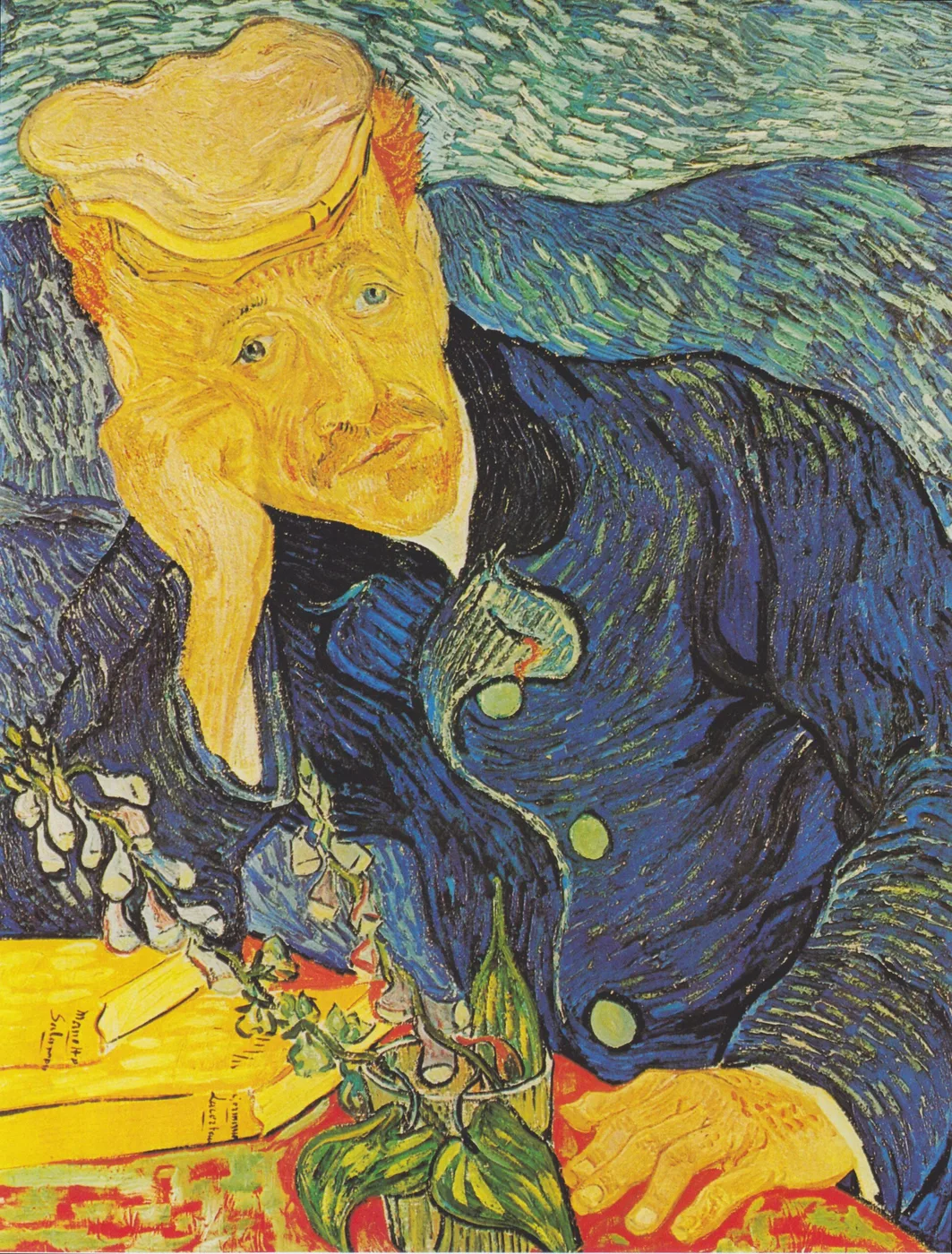
The Portrait of Dr. Gachet is one of Vincent van Gogh’s last and greatest portraits, his Auvers physician leaning on his hand with an expression of gentle melancholy, painted in June 1890, weeks before the artist’s death.
What the portrait shows
Dr Paul Gachet sits at a table with a sprig of foxglove (his medicinal plant) and two yellow books, his head propped on his hand, his blue eyes full of a wistful sadness. Van Gogh said he wanted to paint the ‘heartbroken expression of our time’.
The story behind the painting
Gachet, an art-loving doctor and friend of the Impressionists, cared for Van Gogh at Auvers. The painter described him as ‘something like another brother, so much do we resemble each other physically and also mentally’. In 1990 a version became, briefly, the most expensive painting ever sold at auction.
How Van Gogh painted it
He built the figure and background from restless, wavy strokes of blue that echo the sitter’s mood, the face modelled in warm tones. Our hand-painted oil reproduction keeps that expressive, rhythmic brushwork.
Where is the original?
One version is held by the Musée d’Orsay, Paris; another is in a private collection. Consult the holding museum’s record for the authoritative title, date, medium, dimensions and rights information.
Sizes and materials for Portrait of Dr. Gachet are listed on its product page.
More from this collection
Bring this painting home
Choose a hand-painted oil reproduction for real brushwork, or an archival canvas print for a crisp museum-image edition. Every size preserves the original proportions.
View this work & options
Further reading
Verify the original in the collection record and continue through related works in the catalogue.