
House with Sunflowers: Story, Meaning & Brushwork
Vincent van Gogh reached Auvers-sur-Oise on 20 May 1890, released at last from the asylum at Saint-Remy and installed in a room above the Ravoux inn. He had perhaps ten weeks left to live, though nobody around him knew that yet. What he did know was that he wanted to work, and he set about the village and its gardens at a pace that still startles people who study his output.
Under the loose supervision of Dr Gachet, who lived nearby and painted a little himself, Van Gogh walked out most mornings with his easel and came back with a finished canvas by evening. Thatched roofs, kitchen gardens, wheat fields and the low stone cottages of the village became his subject almost daily. He was not searching for grand motifs. He wanted the ordinary fabric of a place he had grown fond of.
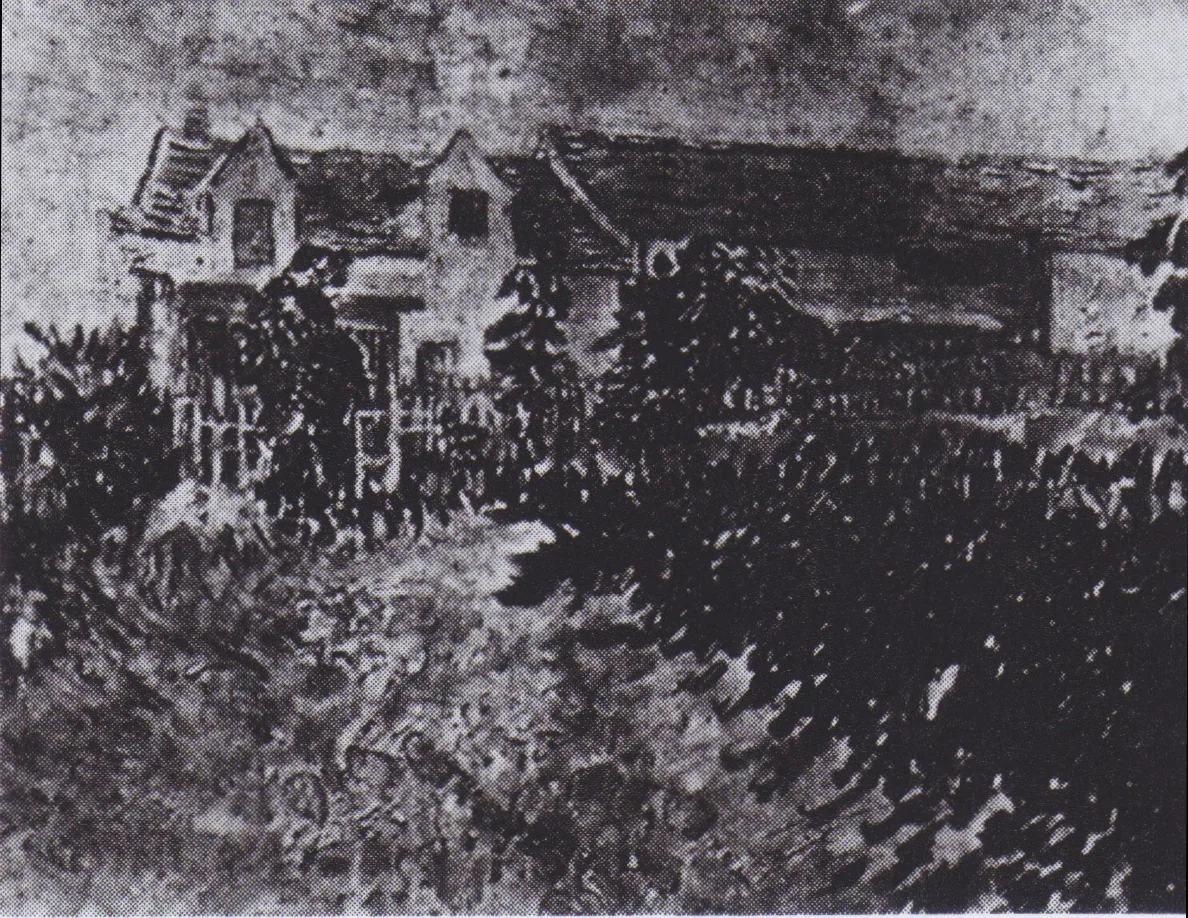
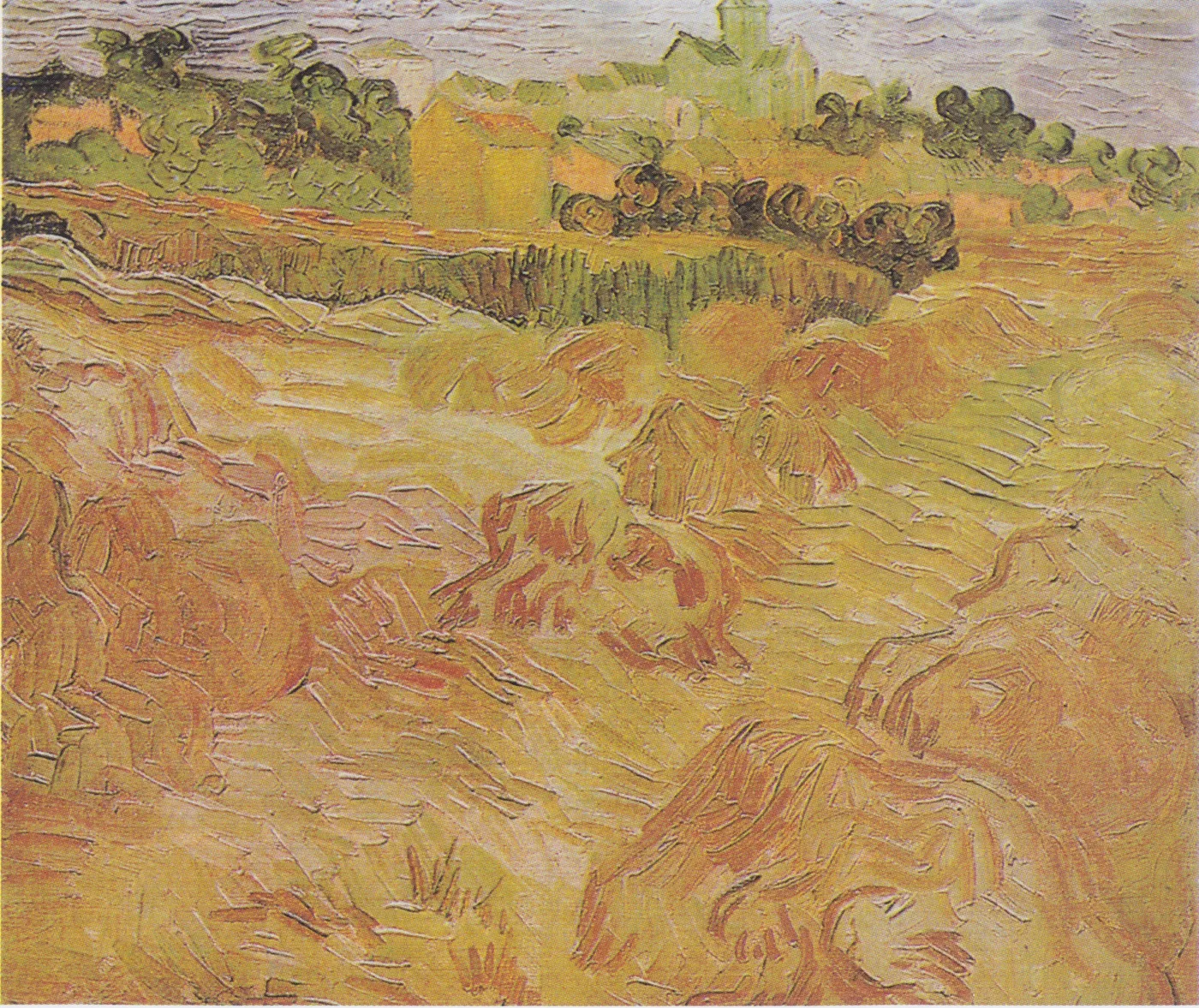
House with Sunflowers, painted in 1890 and measuring a modest 41 by 31.5 centimetres, belongs to this final stretch of work. Its small size suits the pace at which it was made: a single sitting, or close to it, in front of a cottage he must have passed often on his walks around Auvers.
A Cottage Behind the Sunflowers
The painting sets a village house at the centre of its attention, its gables and dormer windows breaking the roofline into an irregular, homely silhouette. A chimney rises at one end. The walls are plain and pale, the kind of building Van Gogh photographed nowhere and painted everywhere in his last weeks, because Auvers was full of them.
A low fence runs along the front of the property, and a path draws the eye from the foreground toward the door, giving the house a lived-in, approachable feel rather than a monumental one. This is not a landmark. It is somebody’s home, seen from the street the way a neighbour would see it.
In front of the wall, sunflowers stand tall and loose among thick garden growth, not cut and arranged in a vase but left where they grew. Dense foliage crowds the lower half of the canvas, bushes and leaves pressing close to the viewer, so that the house itself seems to sit a little way back, glimpsed through a working garden rather than displayed for its own sake.
Paint Laid Down in a Hurry
Van Gogh’s touch shifts noticeably between the two halves of the scene. The architecture is built from shorter, steadier strokes, enough to fix the angles of the roof and the flat planes of the walls without over-describing them. The garden, by contrast, is worked in quick, rhythmic passes of gold and green that barely pause to define an individual leaf or bloom.
That contrast is not accidental. It lets the eye read the house as a stable, settled shape while the planting around it feels alive and slightly unruly, closer to how a garden actually behaves in high summer than to a tidy botanical record of it.
The paint sits thickly in places, ridged where the brush has been dragged and turned rather than smoothed flat. Up close, individual strokes separate into distinct marks of colour; step back, and they resolve into sunflower heads, leaves, and the packed greenery of a well-tended plot. It is fast, physical painting, made by someone working against the light and against the season.
A Motif He Could Not Leave Alone
Van Gogh had returned to sunflowers again and again since his years in Arles, where the flower had become something close to a personal signature. Those earlier paintings show cut blooms arranged indoors, carefully composed still lifes made as decoration for a room he shared with Gauguin.
Here the flower appears differently: rooted, outdoors, growing against a cottage wall among other plants rather than isolated in a vase. It reads less as an emblem posed for the viewer and more as something he simply found in front of him on a walk through the village, worth stopping for regardless of its earlier significance to him.
The house carries its own quiet weight in the picture too. Van Gogh painted the cottages of Auvers repeatedly that summer, drawn to their thatch, their patched walls, their small gardens. Paired with the sunflowers, the subject brings together two things he kept returning to in his final months: humble rural dwellings and a flower he had made unmistakably his own.
Living With the Painting
At this scale, the painting rewards a spot where someone can actually stand close to it, near enough to see the ridges of paint on the sunflower heads and the looser weave of strokes in the foliage. From across a room the golds and greens read as a single warm mass; nearer, they separate back into the fast, individual marks Van Gogh laid down.
Daylight brings out the contrast between the flatter architectural passages and the thick, worked surface of the garden, while lamplight in the evening tends to draw the gold tones forward and let the darker greens recede. Both readings sit comfortably in a room that gets a mix of natural and artificial light through the day.
It is a picture built from a short walk and an ordinary garden, not from grand ambition, and it carries that directness onto a wall. Nothing in it asks to be admired from a distance. It asks to be looked at the way Van Gogh looked at the cottage itself, close up, in passing, on an ordinary day in a village he had come to know well.
Sizes and materials for House with Sunflowers are listed on its product page.
More from this collection
Bring this painting home
Choose a hand-painted oil reproduction for real brushwork, or an archival canvas print for a crisp museum-image edition. Every size preserves the original proportions.
View this work & options
Further reading
Verify the original in the collection record and continue through related works in the catalogue.